Selecting the correct amorphous boron powder purity and particle size directly impacts industrial performance. Metallurgy, ceramics, and energetic materials each demand specific purity and particle size ranges. Overlooking these details often leads to product inefficiency. This guide clarifies definitions and offers practical tools for accurate specification.

Key Takeaways
- Choose the right purity level for your application. Use ≥99% purity for energetic materials to ensure maximum reactivity.
- Select appropriate particle size to enhance performance. Smaller particles improve reactivity and sintering, while larger particles may slow reactions.
- Always confirm batch consistency and oxygen content with suppliers. This prevents performance issues and ensures reliable results.
Understanding Amorphous Boron Powder Purity and Particle Size
What Is Amorphous Boron Powder?
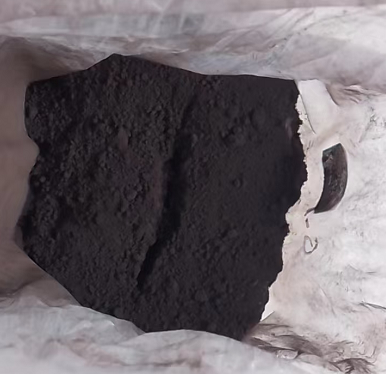
Amorphous boron powder is a fine, gray-black material with a disordered atomic structure. Unlike crystalline boron, it does not have a regular lattice. This structure gives it higher reactivity and improved sintering behavior, making it suitable for metallurgy, ceramics, and energetic materials. The powder is typically produced by reducing boron oxide with magnesium, followed by thermal treatment at temperatures between 1200°C and 1350°C to achieve the desired phase and morphology.
| Property/Aspect | Amorphous Boron | Crystalline Boron |
|---|---|---|
| Atomic Structure | Disordered | Highly ordered |
| Reactivity | Higher | Lower |
| Sintering Behavior | Improved | Harder to process |
| Applications | Metallurgy, energetics | Limited |
| Particle Size | Micron-sized | Larger |
Purity Levels and Significance
Amorphous boron powder purity is available in 95%, 96%, and 99% grades. Higher purity, such as 99%, i==85-99%, is essential for aerospace, defense, and electronics, where strict quality is required. Lower purity, like 95%, is more cost-effective for metallurgy and energetic materials. High-purity powder offers superior reactivity and calorific value, which are critical for advanced technologies.
- 99% purity: Used in high-tech and energy-sensitive applications.
- 95% purity: Suitable for general industrial use.
Particle Size Options and Effects
Particle size options include 0.5 µm, 1 µm, and 325 mesh. Smaller particles increase surface area, enhancing reactivity and sintering. Nanoamorphous boron improves grain connections, while larger grains reduce reaction rates. The production method controls both purity and particle size, impacting performance.
| Parameter | Specification |
|---|---|
| D50 | 1.5–2.5 µm |
| D90 | ≤6 µm |
Impurities and Oxygen Content
Impurities such as magnesium and iron must be minimized to maintain performance. Oxygen content is especially important. Excess oxygen can form a boron trioxide layer, delaying ignition and reducing efficiency in energetic materials. Maintaining low oxygen levels ensures optimal burning and catalytic activity.
- Oxygen ≤1.2 wt% is standard.
- High-purity powder (over 95% B) is vital for energetic applications.
Batch Consistency and Particle Size Distribution
Consistent amorphous boron powder purity and particle size distribution are necessary for reliable results. Industry standards recommend purity ≥99%, D50 between 0.5–2 µm, and oxygen ≤0.8 wt%. Sealed, inert packaging helps maintain these properties. Specifying lot-to-lot consistency ensures uniformity in industrial processes.
Application Selection and Specification Best Practices
Matching Purity and Particle Size to Applications
Selecting the right amorphous boron powder purity and particle size depends on the intended industrial use. For energetic materials, high purity and fine particle size are essential. In metallurgy, lower purity grades may suffice, but consistent particle size ensures uniform grain structure. Ceramics require both purity and controlled particle size for optimal toughness and conductivity.
- Composite materials benefit from boron powder with minimal impurities and defects. The interaction between boron fibers and matrix materials determines mechanical strength and damage tolerance.
- Deposition conditions, such as temperature and gas composition, influence the structure and morphology of boron fibers. These factors must be considered when specifying powder for advanced composites.
Application Table: Metallurgy, Ceramics, Energetic Materials
Procurement teams and engineers use application tables to quickly identify the correct specifications. The table below summarizes recommended values for common industrial uses:
| Application | Purity | Particle Size (D50) | Oxygen Content | Key Considerations |
|---|---|---|---|---|
| Energetic Materials | ≥99% | 0.5–2 µm | ≤0.8 wt% | High reactivity, low oxygen |
| Ceramics | 96–99% | 1–5 µm | ≤1.2 wt% | Toughness, conductivity |
| Metallurgy | 95–96% | 1–5 µm or 325 mesh | ≤1.2 wt% | Grain refinement, cost efficiency |
| Composites | 99% | 0.5–1 µm | ≤0.8 wt% | Mechanical strength, fiber quality |
| Specification Aspect | Importance |
|---|---|
| Purity | Critical for performance in applications |
| Particle Size | Affects the effectiveness in formulations |
| Documentation | Ensures clarity and prevents errors in procurement |
Test Methods for Purity and Particle Size
Testing amorphous boron powder purity and particle size requires specialized laboratory techniques. X-ray diffraction and inductively coupled plasma (ICP) analysis measure purity. Laser diffraction and electron microscopy determine particle size distribution.
- Achieving consistent purity levels across batches remains challenging. Maintaining particle size distribution often requires reprocessing, which impacts production efficiency.
- Laboratory-scale production achieves high purity, but scaling up introduces technical difficulties. Nearly 30% of batches may need reprocessing to meet quality standards.
Packaging, Storage, and Handling
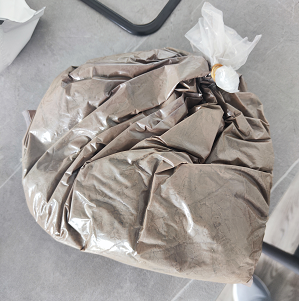
Proper packaging and storage protect amorphous boron powder from contamination and oxidation. The powder’s pyrophoric nature demands sealed, inert containers and controlled environments.
- Store powder in moisture-free, oxygen-free conditions.
- Use dedicated handling equipment to prevent cross-contamination.
- Label all containers with batch numbers and specifications for traceability.
Common Specification Mistakes
Many procurement teams make errors when specifying amorphous boron powder purity and particle size. These mistakes can lead to performance issues or increased costs.
- Overlooking oxygen content, which affects reactivity and ignition.
- Failing to specify batch consistency, resulting in variable product quality.
- Using incorrect particle size for the application, reducing effectiveness.
- Neglecting documentation, which causes confusion during procurement.
Checklist for Specifying Amorphous Boron Powder
Use this checklist to ensure accurate specification and procurement:
- Confirm required purity for your application (e.g., ≥99% for energetic materials).
- Specify particle size range (e.g., D50 0.5–2 µm for high reactivity).
- Set maximum allowable oxygen content (e.g., ≤0.8 wt%).
- Request batch consistency and test reports.
- Ensure proper packaging and storage instructions.
- Document all specifications and communicate with stakeholders.
- Review supplier credentials and quality guarantees.
Correct specification of amorphous boron powder ensures high reactivity and combustion efficiency, which improves process performance and reduces costs. Always consider purity, particle size, and impurities for your application.
- Consulting technical experts provides insight into purity, reactivity, and industry standards.
- Expert advice helps match powder grades to advanced applications.
FAQ
Q. What purity level should I choose for energetic materials?
Q. How does particle size affect ceramic manufacturing?
Smaller particles (1–2 µm) improve sintering and toughness. Larger particles may reduce conductivity and mechanical strength.
Q. What is the best way to store amorphous boron powder?
- Use sealed, inert containers.
- Keep powder dry and away from oxygen.
- Label batches for traceability.
Post time: Jul-09-2026