Procuring high-quality material requires precise evaluation of chemical purity grades, particle size distribution, and surface oxygen/moisture levels. Selecting incorrect specifications creates severe operational risks. Buyers face ignition instability, incomplete chemical synthesis, and structural defects in composite manufacturing. This guide empowers materials engineers and buyers to analyze Technical Data Sheets (TDS) and Certificates of Analysis (CoA) for commercial amorphous boron powder (CAS No. 7440-42-8).
Key Takeaways
- Choose high-purity
boron powder
grades above 98% for advanced electronics and aerospace composites. - Check laser diffraction metrics like D50 and span width to ensure consistent particle size.
- Store amorphous boron in sealed aluminum bags under nitrogen gas to prevent oxygen contamination.
Technical Profile of Amorphous Boron Powder
Chemical synthesis, energetic systems, and advanced metallurgical processing require a clear understanding of elemental structures. Selecting the proper grade depends heavily on atomic organization and material characteristics.
Distinguishing Amorphous Boron from Crystalline Phases
Elemental boron (CAS No. 7440-42-8) exists in two primary structural forms:
amorphous boron powder
and crystalline boron. The amorphous morphology lacks a long-range atomic order. This unorganized arrangement creates high surface energy, open defects, and unsatisfied chemical bonds. Conversely, crystalline phases form a rigid icosahedral lattice with stable bonds.
Different preparation methods of boron powder directly influence these physical characteristics and thermal performance metrics:
| Parameter / Property | Amorphous Boron Powder | Crystalline Boron |
|---|---|---|
| Atomic & Surface Structure | Non-crystalline arrangement, high defect density | Rigid icosahedral lattice, highly ordered |
| Activation Energy & Ignition | Lower activation energy, rapid ignition | High activation energy, slow ignition |
| Combustion Behavior | Thin surface oxide layer ruptures quickly | Dense oxide layer impedes oxygen diffusion |
| Combustion Efficiency | Complete combustion yield | Incomplete combustion yield |
Key Physical Properties and Reactivity Profiles
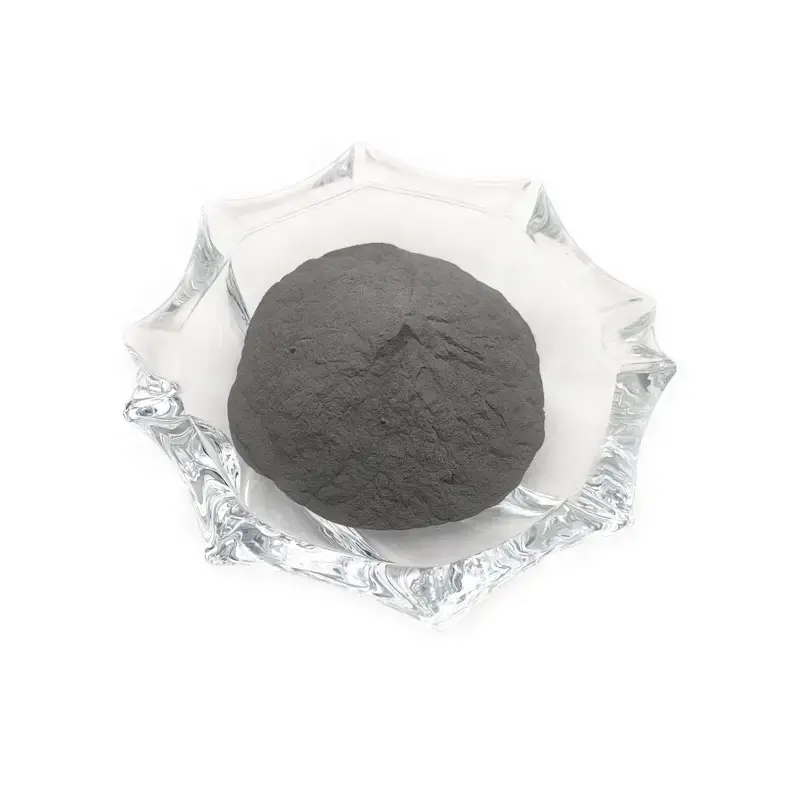
The physical parameters of amorphous boron highlight its extreme durability and high chemical activity. It exhibits a dark gray-black or brown appearance, a specific gravity of 2.34-2.4, and a Mohs hardness of approximately 9.3.
Material Specifications Overview:
- Melting Point: 2,075 C
- Density: 2.34 – 2.37 g/cm3
- Solubility: Insoluble in water, ethanol, ether, and cold acids; soluble in hot concentrated nitric acid and molten metals.
Fine particles require careful handling. Airborne dust presents severe inhalation risks and respiratory irritation. Operators must use respirators, rubber gloves, and protective garments during transfer operations.
Evaluating Purity and Impurities in Amorphous Boron
Evaluating the chemical purity of boron material is essential before committing to production orders. Manufacturing methods create distinct impurity profiles. These residual contaminants directly affect reaction rates, material strength, and thermal output in final applications.
Commercial Grades from 92% to 99.9% Purity
Suppliers offer elemental powders across several distinct chemical tiers to meet different processing needs. Selecting the correct specifications prevents unnecessary costs while protecting product quality:
Standard Technical Grades (92%, 95%
, 96%):
Engineers select these options for cost-effective pyrotechnics, fluxing agents, and general metallurgical additions.- Specialized High-Purity Tiers (98%, 99%, 99.9%):
Advanced chemical synthesis, semiconductor processing, and high-performance aerospace composites demand high-purity materials.
Purity Tiers & Primary Use Cases:
- 92% - 96% Purity: Metallurgy, Fluxing, Basic Pyrotechnics
- 98% - 99.9% Purity: Advanced Composites, Electronics, Precision Synthesis
Commercial amorphous boron powder with higher elemental fractions contains fewer active contaminants. Industrial buyers must match the chemical tier to their specific operational sensitivity.
Quality Tip: Always verify whether a quoted purity percentage refers to total boron content or active elemental boron.
Active Elemental Boron vs. Boron Oxide Content
Not all boron in a powder sample contributes to target chemical reactions. Surface exposure to air produces a thin oxide layer consisting primarily of diboron trioxide (B2O3). This oxide shell creates dead weight and alters reaction energy.
Total purity measurements count both active elemental boron and bound oxide species. However, chemical synthesis requires active boron atoms. Excessive oxide layers lower ignition temperatures and disrupt precise stoichiometry.
Technical Data Sheets should specify both total purity and insoluble oxide fractions. High ambient moisture accelerates surface oxidation during storage. Consequently, measuring surface oxide content provides a direct indicator of material freshness and handling care.
Impact of Metallic Impurities like Magnesium and Iron
The thermite reduction of boric oxide often uses magnesium metal as a reducing agent. This production process leaves behind traces of magnesium, iron, oxide compounds, and soluble salts.
| Impurity Type | Typical Origin Source | Operational Risk / Effect |
|---|---|---|
| Magnesium (Mg) | Magnesium reduction byproduct | Lowers ignition threshold; alters combustion kinetics |
| Iron (Fe) | Milling and processing equipment | Causes structural defects in high-purity ceramic matrices |
| Soluble Salts | Chemical washing steps | Promotes moisture absorption; causes localized corrosion |
Magnesium remnants alter reaction thermodynamics during energetic formulations. Meanwhile, iron inclusions create localized stress points in titanium boride ceramics and structural fibers. High-purity formulations minimize these metallic contaminants to protect structural integrity.
Proper evaluation requires analyzing chemical composition through verified testing methods. Material performance relies on selecting amorphous material that maintains tight impurity tolerances across every manufacturing batch. Buyers using high-purity amorphous boron powder ensure repeatable synthesis and consistent structural performance.
Evaluating Particle Size Distribution in Boron Powder
Structural performance depends on the physical dimensions of raw materials.
Fine boron powder
provides rapid reaction kinetics and higher packing density in industrial processes. Engineers must analyze particle size metrics to ensure consistent quality and processing efficiency.
Sizing Metrics: Nanoscale, 0.5um, 1um, and 325 Mesh
Commercial suppliers categorize amorphous powder by specific size ranges. Each size class serves distinct functional roles across manufacturing applications:
- Nanoscale & Sub-Micron Grades (0.5um – 1um):
These ultrafine particles offer extremely high surface area. Energetic formulations, igniters, and chemical synthesis demand these fine sizes for fast reaction speeds. - Standard Micron Grades (325 Mesh):
A 325 mesh specification corresponds to particles passing through a 44-micron sieve opening. Refractory ceramics, fluxing agents, and metallurgical additions favor this size for easier handling.
Particle Size vs. Application Fit:
- Nanoscale (0.5um - 1um): High-Speed Energetics & Chemical Synthesis
- Micron Scale (325 Mesh): Metallurgy, Ceramic Matrices & Refractories
Analyzing D10, D50, and D90 Span Widths
A single mesh number does not describe the entire particle size distribution. Laser diffraction testing provides critical percentile measurements: D10, D50, and D90.
The D50 value represents the median particle diameter where half the sample volume is smaller. D10 indicates the threshold where 10% of the sample is finer. D90 marks the boundary where 90% of the sample is smaller.
For metal powder particle size distributions, the span width is calculated using the formula: Span = (D90 – D10) / D50. In this equation, D10 and D90 represent the particle diameters at the 10th and 90th cumulative percentiles, while D50 corresponds to the median size. This calculation yields a normalized metric that quantifies the breadth of the distribution relative to its midpoint.
Quality Tip: A lower span width indicates a narrow particle distribution. Narrow distributions ensure uniform melting, predictable slurry viscosity, and consistent chemical reaction rates.
Agglomeration Control in Sub-Micron Powders
Ultrafine amorphous powders possess immense surface energy. Particles naturally stick together and form tight clusters called agglomerates. Agglomeration prevents uniform mixing and reduces chemical reactivity during processing.
Manufacturers rely on specific processing methods and additives to maintain loose, free-flowing particles:
- Cryomilling:
Cryomilling is identified as an effective low-temperature milling technique that produces fine particles while preventing powder agglomeration and minimizing oxidation by operating under an inert nitrogen or argon gas environment. - Chemical Surfactants:
CE-2000 surfactant is utilized during liquid-phase processing (in dodecane medium) for dispersing boron powder mixtures.
Proper handling and storage prevent re-agglomeration. Processing facilities must store fine amorphous materials under inert gas covers to maintain particle dispersion.
Assessing Surface Oxygen and Moisture Content
Environmental exposure significantly affects material stability. Managing ambient atmospheric contact preserves chemical performance and core thermal properties.
Oxidation Dynamics and Boron Oxide Layering
Fine
amorphous boron powder
reacts quickly with ambient oxygen. This reaction forms a thin diboron trioxide (B2O3) layer on particle surfaces. The oxide shell acts as a heat sink during thermite reactions. It increases ignition delay times and reduces total thermal output. Thick oxide layers also impede full chemical synthesis during high-temperature manufacturing.
Permissible Limits for Surface Oxygen and Moisture
Excess surface oxygen and absorbed water compromise energetic performance. Water vapor promotes hydrolysis reactions and forms strong particle clusters. Technical specifications set strict baseline boundaries:
| Specification Parameter | Standard Permissible Limit | Operational Risk |
|---|---|---|
| Surface Oxygen | < 1.0% – 1.5% | Lower energetic output; delayed ignition |
| Moisture Content | < 0.2% | Particle clumping; surface oxidation |
High oxygen levels lower active boron percentages and degrade overall quality. Technical buyers must review batch analytical results to verify these limits before purchasing.
Storage and Passivation to Prevent Quality Loss
Proper packaging prevents atmospheric degradation during transportation and storage. Suppliers utilize sealed multi-layer aluminum foil bags to block air ingress.
Handling Protocol: Store sealed containers in cool, dry facilities. Dispersing amorphous boron powder under an inert gas cover, such as nitrogen or argon, prevents oxidation and maintains particle flowability.
Passivation techniques create stable surface conditions. Careful climate control extends product shelf life without losing reactivity.
Key Applications for High-Purity Boron Powder
Industrial applications of boron powder span several high-tech manufacturing sectors. Materials engineers rely on high-purity boron powder to elevate structural strength, increase reaction kinetics, and refine metal microstructures.
Boron Fiber Production and Advanced Composites
High-purity specifications enable target tensile breaking strengths from 2744 to 3430 MPa and elastic modulus values from 39200 to 411600 MPa. Chemical vapor deposition uses
elemental boron
to produce high-strength boron fibers. Reinforcing aluminum, magnesium, titanium, epoxy, or ceramic matrices with these fibers creates light, high-temperature composite materials.
Composite Matrix Compatibility:
- Metal Matrices: Aluminum (Al), Magnesium (Mg), Titanium (Ti)
- Resin Matrices: Epoxy, Polyamide
- Ceramic Matrices: Advanced High-Temperature Refractories
Consequently, the aerospace sector consumes large material quantities to produce structural components for aircraft and defense systems.
Ignition Devices and Titanium Boride Ceramics
Energetic systems utilize active boron particles to ensure fast heat release in pyrotechnic igniters. Ceramic processing facilities synthesize titanium boride (TiB2) ceramics for conductive heating elements and armor plating. These advanced ceramics achieve exceptional abrasive resistance and fracture toughness exceeding 10 MPa*m1/2. Electronics and defense applications rely heavily on these specialized ceramic formulations.
Metallurgical Deaerators and Boron-Cast Iron Refinement
The metallurgy industry consumes boron powder during specialized metal casting operations. Small additions act as a powerful deaerator and grain refiner for boron-cast iron. This process refines internal metal structures and enhances wear resistance. As a result, automotive manufacturers, tractor builders, and machine tool producers widely utilize boron-treated cast components.
Verification Techniques and Testing Protocols
Rigorous laboratory testing validates material quality before commercial deployment. Quality control teams use standardized testing protocols to confirm chemical purity and particle properties.
Chemical Analysis via ICP-OES and ICP-MS
Inductively Coupled Plasma Optical Emission Spectroscopy (ICP-OES) quantifies major elemental components and trace metal contaminants. Laboratory technicians dissolve sample batches in hot concentrated acids. ICP-OES measures trace levels of magnesium, iron, and sodium.
For high-purity grades, testing facilities deploy Inductively Coupled Plasma Mass Spectrometry (ICP-MS). This instrument detects ultra-trace impurities down to parts-per-billion levels. ICP-MS guarantees accurate verification for demanding semiconductor and aerospace specifications.
PSD Measurement Using Laser Diffraction
Laser diffraction analyzers evaluate the particle size distribution of
boron powder
.
The instrument directs a laser beam through a dispersed powder suspension. Light scatters at specific angles based on particle diameters.
| Metric Parameter | Measurement Function | Quality Target |
|---|---|---|
| D10 | Identifies fine particle threshold | Minimal sub-micron dust |
| D50 | Determines median particle diameter | Target application size |
| D90 | Marks coarse particle limit | No oversized grains |
Digital software calculates D10, D50, and D90 values instantly. The system also reports the span width to confirm batch consistency.
Gas Analysis via LECO Combustion Methods
Inert gas fusion and LECO combustion analyzers measure non-metallic elements like oxygen, carbon, and nitrogen. The machine melts high-purity samples inside a graphite crucible at high temperatures.
Quality Verification: Low oxygen values confirm minimal surface oxidation on boron powder shipments.
Infrared detectors analyze released gases to quantify surface oxides and moisture content precise to parts-per-million levels.
Procurement Checklist and Quality Assurance
Procuring amorphous boron powder
requires systematic quality checks to ensure material consistency. An initial physical appearance assessment serves as a critical preliminary check before laboratory testing. Visual changes often signal moisture exposure or surface contamination.
Validating Supplier Certificates of Analysis
Buyers must verify essential analytical metrics on the Certificate of Analysis matching technical data sheets:
- Amorphous Content:
Verification of the exact purity and percentage of the amorphous phase. - Particle Size Distribution:
Measurement of particle sizes and their spread across the shipment batch. - Impurity Levels:
Quantification of contaminants, specifically focusing on metallic impurities like iron, aluminum, and calcium.
Packaging Standards and Inert Gas Flushing
Moisture protection requires sealed multi-layer composite bags with inert gas flushing. Vacuum sealing with argon or nitrogen prevents oxidation in fine boron powder. Industrial buyers should execute core procurement checkpoints:
- In-House Process Evaluation: Verify supplier capabilities, parameter methods, and testing protocols when evaluating boron powder shipments.
- Batch Pre-Testing: Test small samples under operational conditions before committing to full production orders.
- Pre-Shipment Inspection: Perform independent verification covering batch sampling, lab testing, and loading supervision.
Contractual Warranties and Confidentiality Agreements
Formal supply contracts lock in strict purity guarantees for every delivery of amorphous boron powder. Legal agreements establish clear parameter tolerances, contractual warranties, and batch retention policies. Dedicated confidentiality agreements protect proprietary synthesis formulas and trade secrets. Final document audits reconcile customs paperwork, safety data sheets, and shipping invoices to guarantee total regulatory compliance.
Evaluating amorphous boron powder requires verifying chemical purity, D50 particle distribution, and oxygen limits. Review these core evaluation benchmarks:
| Parameter | High Grade | Standard Grade |
|---|---|---|
| Elemental Fraction | >99.99% target | 95-98% target |
| Batch Stability | Exceptional consistency | Variable consistency |
Buyers sourcing amorphous boron powder should request multi-batch CoAs, verify vacuum packaging, and secure clear contractual quality guarantees before purchasing boron powder.
FAQ
What is the main difference between amorphous and crystalline boron powder?
Amorphous boron features a disordered atomic structure with higher chemical reactivity and a lower ignition temperature. Crystalline boron possesses a stable, rigid lattice with lower chemical reactivity.
Key Takeaway: Amorphous phases ignite faster and offer superior energetic reactivity compared to crystalline forms.
How should high-purity amorphous boron powder be stored to prevent quality loss?
Store amorphous boron powder in sealed, multi-layer aluminum bags under an inert gas cover like argon or nitrogen. This packaging blocks atmospheric moisture and prevents surface oxidation.
What particle sizes are available for commercial amorphous boron powder?
Commercial grades range from nanoscale and sub-micron options (0.5um and 1um) for high-speed energetics to standard micron specifications (325 mesh) for ceramic matrices and metallurgy.
Post time: Jul-30-2026